From Dharavi to Dormitory: How India's Slum Redevelopment Projects Are Missing the Worker Housing Opportunity
As the massive Dharavi Redevelopment Project (DRP) accelerates, aiming to transform one of Asia’s largest informal settlements into a gleaming, world-class urban township in Mumbai, the narrative has largely focused on the rehabilitation of local families and the creation of luxury real estate.
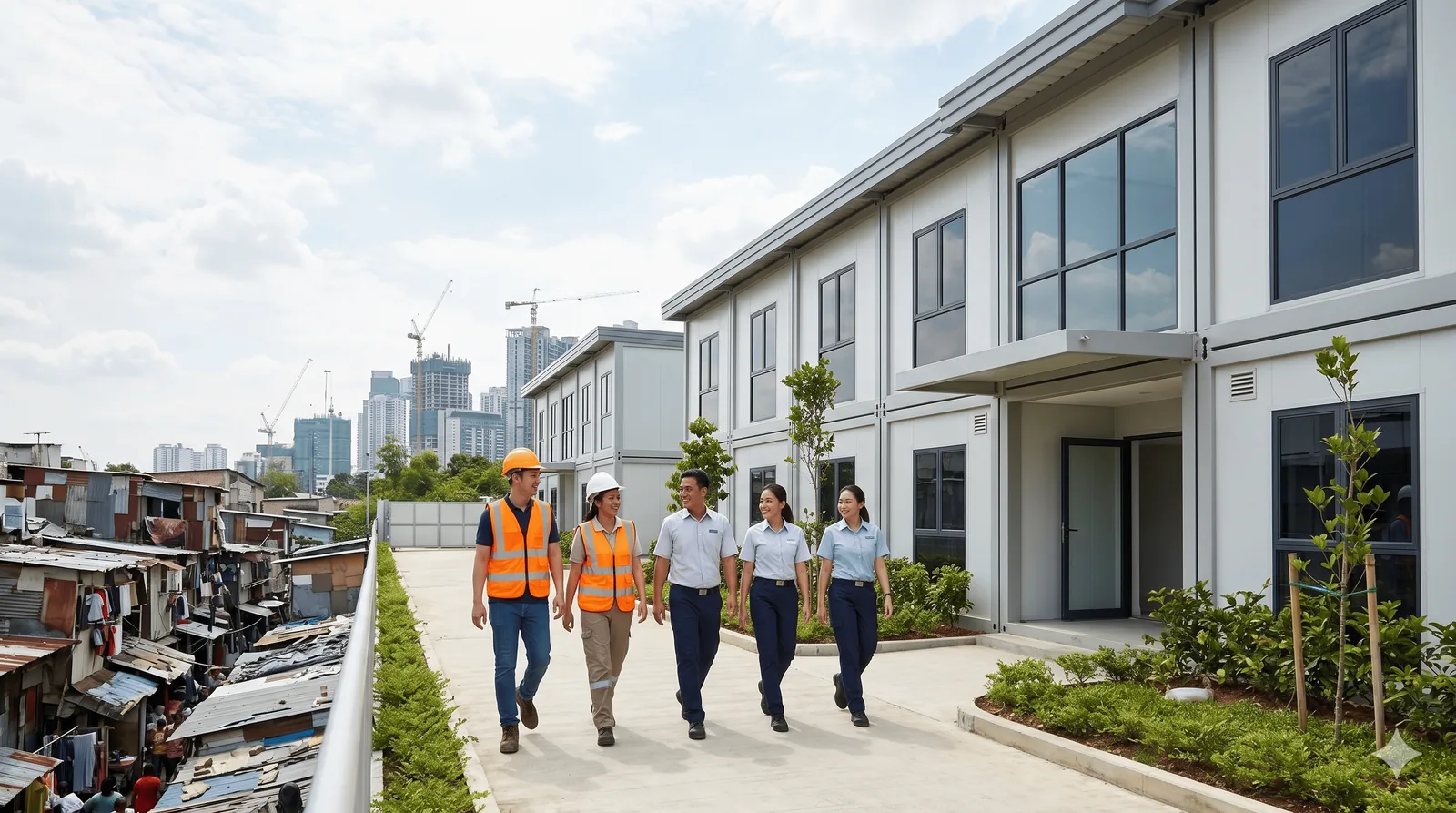
Dharavi is making global headlines again. As the massive Dharavi Redevelopment Project (DRP) accelerates, aiming to transform one of Asia’s largest informal settlements into a gleaming, world-class urban township in Mumbai, the narrative has largely focused on the rehabilitation of local families and the creation of luxury real estate. Slum rehabilitation schemes in metropolitan hubs like Mumbai and Delhi have generally followed the same blueprint: consolidate the land, move the eligible original residents into vertical residential flats, and sell the rest to premium buyers to fund the project.
However, beneath the celebratory headlines of this urban transformation lies a glaring blind spot. These redevelopment models completely ignore a massive, invisible demographic that has historically relied on slums for affordable shelter: the migrant industrial and commercial workforce. By focusing exclusively on standard family residences and commercial spaces, India’s urban planning framework is missing a crucial opportunity to integrate purpose-built worker housing solutions.
The Blind Spot in Urban Planning: Where Do the Migrants Go?
To understand the critique of current slum redevelopment, we must first recognize the true demographic of places like Dharavi. While there are thousands of multi-generational families who are eligible for rehabilitation flats, slums also serve as the primary rental housing market for millions of blue-collar and lower-tier white-collar migrant workers. These workers power the city's manufacturing, construction, logistics, and service sectors.
When slum areas are cleared and transformed into high-rise residential complexes, the informal network of cheap rentals and unregistered pg housing vanishes. The newly built rehabilitation flats are designed for families, not as dormitory housing for workers in India. The displaced workforce is subsequently pushed to the outermost fringes of the city or into even more precarious, illegal, and hazardous settlements.
This is a structural urban planning failure. Modern slum redevelopment should not just be an exercise in building residential real estate; it should be an opportunity to build critical urban infrastructure. If we want our cities to remain economically competitive, urban planners and developers need to move beyond standard apartments and start incorporating formalized, affordable worker housing India into their master plans.
The Data-Driven Reality: 25 Million Worker Beds Needed by 2033
The failure to incorporate workforce accommodation into urban redevelopment couldn't come at a worse time. India is on the precipice of a massive manufacturing revolution, driven by the "Make in India" initiative and the PLI (Production Linked Incentive) schemes.
According to a landmark report released by NITI Aayog in December 2024, India's manufacturing sector alone will require a staggering 25 million beds for industrial workers over the next decade. Currently, the supply of legally compliant, habitable worker housing in and around major industrial and urban zones is virtually zero. What exists is largely unregulated, unsafe, and inhumane—buildings lacking basic fire safety, sanitation, and medical support.
When workers are pushed to the fringes because inner-city slums have been gentrified without alternative blue collar worker housing, they face grueling daily commutes. This creates a vicious cycle. Companies are forced to spend heavily on employee transportation logistics—often exceeding INR 2,500 per worker per month—just to ferry them from distant informal settlements to the factory floor.
More alarmingly, this housing and commute crisis translates directly into an industry-wide attrition rate of 8-24% per month. When workers are forced to live in squalor and endure exhausting travel, they inevitably leave. This constant churn destroys productivity and skyrockets rehiring and retraining costs.
A Paradigm Shift: Treating Housing as Infrastructure, Not Just Real Estate
To resolve this demand-supply paradox, we need a fundamental paradigm shift in how we view the built environment. Worker accommodation must no longer be viewed as a fringe real estate sector or equated with run-down hostels. Instead, it must be recognized as vital industrial infrastructure—as essential as power grids, water supply, and road networks.
This means moving away from informal, poorly managed pg housing and shifting towards purpose-built shared living spaces for workers, specialized corporate housing solutions India, and compliant serviced apartments tailored for the industrial workforce. Slum redevelopment authorities should mandate that a percentage of redeveloped land be zoned specifically for high-density, high-quality workforce accommodation.
However, even if the government allocates the space, the execution cannot fall on the factory owners or corporations themselves. Manufacturing companies specialize in production, not real estate management. Expecting HR leaders to take on the heavy Capital Expenditure (CapEx) and operational headaches of building and running housing facilities is a recipe for inefficiency.
Enter Manzl: India’s Premier Workforce Infrastructure Partner
This is where the ecosystem requires a professional, institutional approach. Manzl is India’s pioneering workforce housing solutions provider, radically revolutionizing how corporations house their workforce. It is crucial to note that Manzl is not merely a hostel operator; Manzl is a strategic workforce infrastructure partner dedicated to solving the 25-million-bed crisis through a highly efficient, zero-CapEx model.
Understanding the deep corporate dilemma of capital allocation, Manzl offers a unique Rental (OpEx) Model. Through this framework, companies do not have to sink massive CapEx into non-core real estate assets. Instead, Manzl provides fully managed, plug-and-play industrial worker housing India. From comfortable and hygienic manufacturing worker accommodation to round-the-clock security, nutritious food, rigorous housekeeping, and medical services, Manzl manages the entire lifecycle of the facility.
One of Manzl's most innovative strategies is optimizing the "Cost to System." Rather than watching companies bleed money on transport logistics, Manzl develops site adjacent factory employee accommodation. By moving the workforce closer to the manufacturing hubs, companies can virtually eliminate travel fatigue. The economic brilliance of this model is that companies can subsidize the cost of world-class, fully compliant worker housing using the savings generated from slashed transportation budgets. This results in premium housing for the workforce at zero incremental cost to the employer.
Setting International Standards and Empowering the Female Workforce
As India pushes toward a $5 trillion economy, setting global standards for worker welfare is non-negotiable. Manzl develops its properties in strict accordance with international worker accommodation standards established by bodies such as the UN, ILO, and leading MNCs. This guarantees SAFE accommodation India (Secure, Affordable, Flexible, Efficient) that mitigates legal risks and drastically reduces attrition for both blue-collar and white collar worker housing in India.
Furthermore, Manzl recognizes that you cannot discuss the future of Indian manufacturing without prioritizing the specific needs of the female workforce. Many industries that are significant female employers, such as electronics, textiles, and footwear, rely heavily on women. Yet, mixed accommodations and unsafe slum environments serve as massive barriers to entry. Manzl addresses this critical bottleneck by providing dedicated Women-Only Facilities. These specialized spaces feature strict biometric access control, 24/7 surveillance, and an environment where safety, privacy, and dignity are structurally integrated.
The Way Forward: Integrating Redevelopment and Worker Housing
As bulldozers clear the ground in Dharavi and other major slum clusters across India, planners are faced with a choice. They can either continue building exclusive residential and commercial silos—displacing the very hands that build and run the city—or they can adopt an inclusive master plan that integrates purpose-built workforce accommodations.
Integrating workforce housing into urban redevelopment schemes isn't just a social obligation; it is a profound economic necessity. By partnering with dedicated infrastructure players like Manzl, corporate stakeholders and urban planners can transform the looming housing crisis into a massive competitive advantage.
The goal is clear. We must replace the reliance on hazardous, illegal settlements with compliant, world-class dormitory housing for workers in India. Only by providing dignified, professionally managed living spaces can we stabilize our workforce, eliminate crippling attrition rates, and lay the true foundation for the future of Indian industry. The blueprint is ready—it is time to build it.