How Real Estate Developers Can Monetize Underutilized Buildings via Worker Housing
By leveraging repurposed building solutions India, developers can convert underperforming assets into high-yield, recession-proof workforce housing.
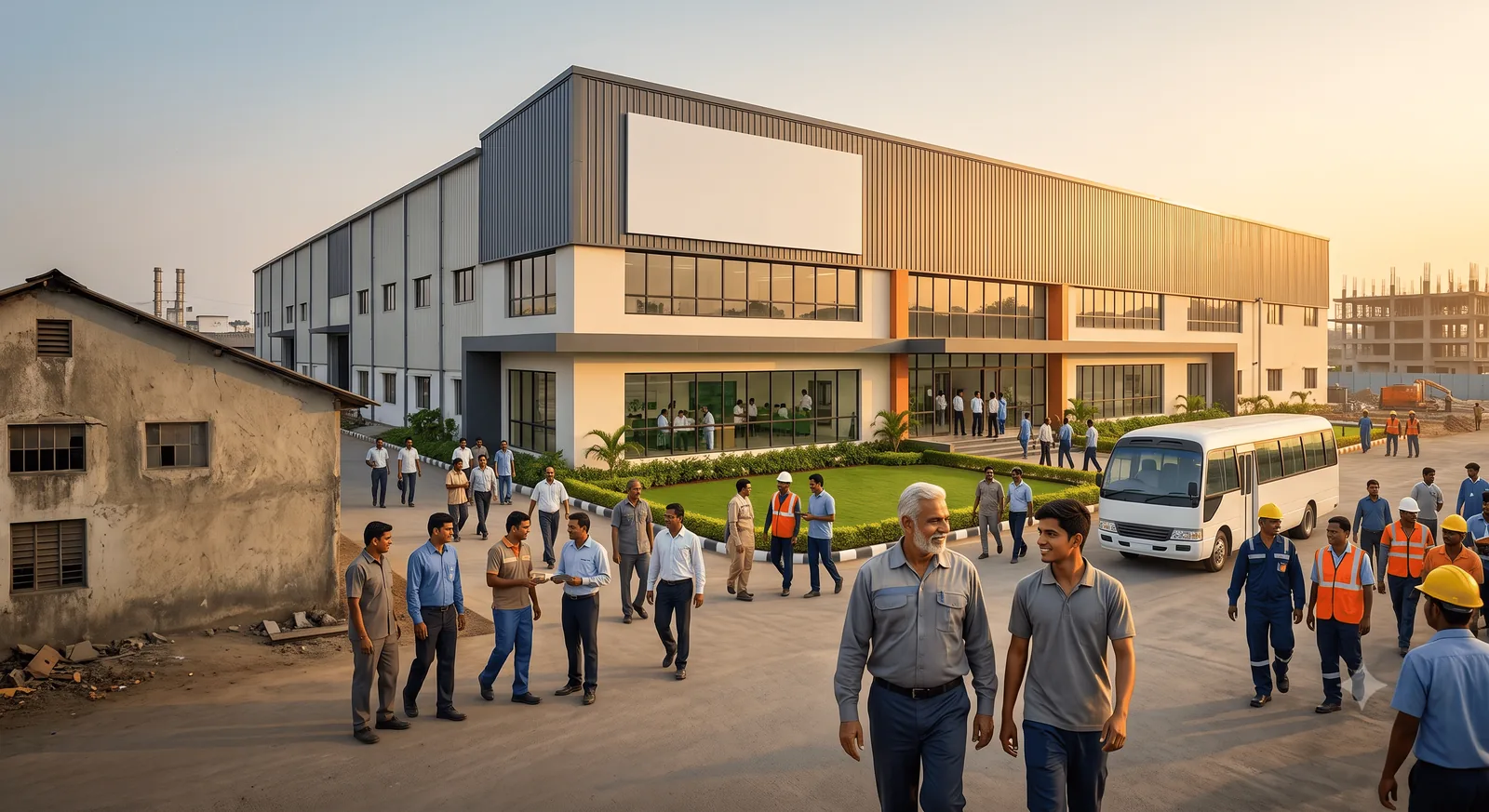
The Indian real estate landscape is undergoing a massive, irreversible paradigm shift. For decades, commercial real estate developers relied on a standard playbook: build or acquire office spaces, lease them to IT firms or BPOs, and enjoy steady, predictable yields. However, the post-pandemic reality has drastically altered this equation. With the rise of hybrid work models and widespread remote setups, traditional commercial real estate and BPO spaces are facing severe stagnation. Massive structures now sit empty, generating zero revenue while maintenance costs and property taxes continue to drain capital.
Yet, parallel to this commercial stagnation, another sector in India is experiencing explosive growth and an unprecedented logistical crisis: the manufacturing and industrial boom. Initiatives like Make in India, the PLI Scheme, and the broader vision of Viksit Bharat 2047 are rapidly positioning the country as a global manufacturing hub. But this momentum is bottlenecked by a critical shortage. According to a landmark NITI Aayog report released in December 2024, India’s manufacturing sector alone will require a staggering 25 million beds for industrial workers over the next decade.
For forward-thinking real estate developers, this demand-supply paradox presents an incredibly lucrative opportunity. It is time to move beyond standard commercial leases and explore adaptive reuse. By leveraging repurposed building solutions India, developers can convert underperforming assets into high-yield, recession-proof workforce housing.
Whether you are evaluating property appreciation and flipping potential within a 150km radius of Mumbai's commercial zones, or looking to revitalize empty structures along the booming industrial corridors of Andhra Pradesh and Tamil Nadu, the solution lies in transforming empty spaces into purpose-built accommodations. This is where Manzl steps in—not as a traditional hostel operator, but as your strategic workforce housing infrastructure partner.
The Post-Pandemic Stagnation in Traditional Commercial Real Estate
The fallout from the global pandemic left millions of square feet of commercial space vacant across India's metropolitan and Tier-2 cities. Former BPO hubs and IT parks have seen their tenant retention plummet. Developers who once enjoyed stable, long-term corporate leases are now struggling with high vacancy rates, forcing them to slash rents or subdivide properties at a loss.
Simultaneously, traditional residential models like standard rental housing, scattered serviced apartments, or unorganized pg housing do not offer the scale or localized operational efficiency required to generate massive, reliable yields from large, underutilized commercial buildings. The residential market is fragmented, and managing hundreds of individual tenants is an operational nightmare for a developer whose core competency is real estate, not hospitality.
The market needs a pivot. It requires a model that offers the long-term stability of a corporate lease but captures the immense, untapped demand of the industrial boom.
Adaptive Reuse: Transforming Empty Spaces into Industrial Worker Housing India
Adaptive reuse is the most strategic path forward for developers stuck with vacant commercial buildings. Instead of tearing down structures or waiting for the IT sector to return to peak occupancy levels, developers can partner with infrastructure experts to retrofit these buildings into highly functional worker housing solutions.
The demand for worker housing solutions in India is not a speculative bubble; it is a critical operational necessity. Currently, the habitable supply of blue collar worker housing in India is virtually zero. What exists is a sprawling network of illegal, unsafe, and inhumane structures that lack basic fire safety, structural stability, sanitation, and compliance.
Because of these deplorable living conditions, manufacturing companies are suffering heavily. Industry data reveals a crippling 8-24% monthly attrition rate in the manufacturing sector. Workers living in squalor or enduring exhausting daily commutes simply leave, forcing companies to endure endless rehiring and retraining costs. Furthermore, companies are burning capital—often over INR 2,500 per worker per month—just on transportation logistics to ferry employees from distant, unplanned settlements to the factory gates.
There is a desperate, highly funded corporate demand for site adjacent factory employee accommodation. Corporations are actively seeking to house their workforce closer to their factories to eliminate travel fatigue, boost productivity, and slash attrition. They need factory worker housing solutions, and they are willing to sign long-term, lucrative contracts for them.
The Financial Playbook: Traditional Leases vs. A 500-Bed Managed Facility
Let’s look at a comprehensive financial comparison between holding out for a traditional commercial tenant versus partnering with Manzl to convert an empty BPO building into a 500-bed managed worker facility.
1. Tenant Acquisition and Vacancy Risk
Traditional Commercial: Finding a single corporate tenant for a massive BPO space can take months, if not years, in the current market. Even if subdivided, you face continuous churn and heavy marketing costs.
500-Bed Managed Facility: The demand for manufacturing worker accommodation is effectively infinite. By offering SAFE accommodation India (Secure, Affordable, Flexible, Efficient), these beds are rapidly filled through direct, long-term tie-ups with manufacturing corporations. The vacancy risk is practically mitigated by the massive structural deficit of NITI Aayog's projected 25 million beds.
2. Yield Stability and Recession Proofing
Traditional Commercial: Highly sensitive to economic downturns and fluctuating corporate remote-work policies.
500-Bed Managed Facility: Manufacturing and industrial output are the physical backbone of the economy. Factory workers cannot "work from home." Therefore, industrial worker housing India provides a recession-proof, long-term yield. The need for dormitory housing for workers India remains constant, regardless of software or service industry fluctuations.
3. CapEx Optimization for the Developer
Converting an office building into a housing campus does require initial retrofitting—adding sanitation blocks, proper ventilation, and optimized partitions for shared living spaces for workers. However, the return on this investment is aggressively accelerated because the resulting asset commands premium corporate contracts. Companies are eager to shift away from their own capital-heavy construction projects and embrace a rental (OpEx) model, paying premium lease revenues to house their staff in fully compliant facilities without taking on construction themselves.
Manzl: Your Workforce Housing Infrastructure Partner
When developers hear about transitioning into the housing market, they often envision the headaches of being a landlord: dealing with daily maintenance, running cafeterias, and managing individual complaints.
This is the critical differentiator: Manzl is not a basic hostel operator. Manzl is a sophisticated workforce housing infrastructure partner that bridges the gap between real estate developers and large-scale corporate demand.
We offer end-to-end corporate housing solutions India. If you have an underutilized asset, Manzl manages the comprehensive operational takeover. We transform your building into a fully compliant, world-class habitat built to international standards laid out by the UN, ILO, and IOM.
The developer simply collects optimized lease revenues while Manzl handles everything else.
The End-to-End Operational Takeover
To monetize an underutilized building effectively, the operations must be flawless. Manufacturing companies demand strict compliance and high living standards for their employees, whether they require white collar worker housing or migrant worker accommodation.
When a developer partners with Manzl, we deploy our turnkey management system, which completely insulates the developer from day-to-day operational friction. Our managed solution includes:
World-Class Infrastructure & Compliance: We ensure the retrofitted building meets rigorous international fire safety norms, structural codes, and hygiene standards, instantly mitigating legal risks for both the developer and the corporation.
Comprehensive Facility Management: We run the entire ecosystem. This includes nutritious food catering, meticulous housekeeping, daily maintenance, and 24/7 medical services.
Advanced Security Protocols: We implement strict access controls, biometric security, and round-the-clock surveillance to guarantee worker safety.
Dedicated Women-Only Facilities: A massive component of India's manufacturing future relies on the female workforce in sectors like textiles, electronics, and semiconductors. Manzl specializes in operating exclusive, highly secure women-only facilities, addressing a massive barrier to entry for corporations whose female employees require specialized, safe environments.
White Collar and Blue Collar Integration: We understand that a factory ecosystem requires diverse living tiers. We seamlessly manage white collar worker housing in India for floor managers and engineers, alongside high-density blue-collar dormitories.
Creating Value at Zero Incremental Cost to the System
The true brilliance of the Manzl model—and exactly why corporations are so eager to sign leases for buildings operated by us—is the optimization of the "Cost to System."
Companies currently bleed capital on inefficient transport networks. By leasing your newly repurposed site adjacent facility, these companies redirect their massive transportation budgets toward high-quality housing rent. They get a rested, healthy, retained workforce without adding a heavy new line item to their P&L.
For the real estate developer, this means you are tapping into existing corporate operational budgets that are simply being reallocated. You aren't forcing the market to find new money; you are providing a dramatically superior, cost-neutral solution for their biggest operational headache.
Conclusion: Future-Proof Your Real Estate Portfolio
The era of relying solely on BPO leases for large commercial spaces is fading. The future of Indian real estate yields lies in supporting the country's manufacturing revolution. With a 25 million bed deficit and a market currently saturated with hazardous, non-compliant options, the opportunity to introduce premium, institutional-grade housing has never been clearer.
Don't let your underutilized buildings drain your portfolio's profitability. Through strategic adaptive reuse, your empty structures can become dynamic, highly profitable centers of migrant worker accommodation and corporate housing.
Partner with Manzl. Let us act as your workforce housing infrastructure partner, handling the complex operational execution, compliance, and corporate tenant management. You focus on expanding your real estate empire and collecting optimized, recession-proof revenues; we will focus on housing the workforce that is building India's future.
More from our blog
Beating the 6-Month Factory Clock: Why Adaptive Reuse is the Only Way to House Workers in Hosur
This rapid pace of industrial growth is incredible for the broader economy, but it presents a massive and immediate logistical challenge for human resources and operations teams.
Sanand's Semiconductor Milestone: Transitioning from Fab Construction to Active Chip Production
Sanand is rapidly transforming into the crown jewel of India's semiconductor ambition.
The Sriperumbudur & Oragadam September 2026 Construction Boom: Where Will the Assembly Workers Live?
But amidst this spectacular September 2026 construction boom, a critical, often-overlooked question is echoing through the boardrooms of top manufacturing enterprises: Where will the massive influx of assembly workers live?